
COHR Division
| The Community Outreach, Help and Recovery Unit (COHR) is a low-bar access behavioral health unit within the Somerville Police Department. Working with all community members regardless of status or insurance, this is a free service through the city that can be accessed directly by simply calling or walking into the public safety building. | 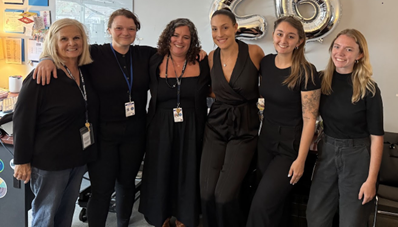 |
|
COHR helps improve overall quality of life for individuals and families through:
|
|
| COHR works collaboratively with all city departments and service providers including courts, probation, and the District Attorney’s office. Quarterly stakeholder meetings are held at the Department and open to the public. | Free customized Trauma-Informed training related to Behavioral Health to residents and local organizations or committees can be provided upon request. Learn more about training opportunities and services provided through COHR visit COHR Services. |
COHR Services
|
The Community Outreach Help and Recovery (COHR) Unit is a co-located clinical outreach program who partners with police to provide support to community members impacted by behavioral health. COHR’s training and outreach model is developed with a multidisciplinary approach informed by collaborations between mental health professionals, stakeholders, families, law enforcement, and individuals impacted by behavioral health. |
|
Training |
Resident Support |
| COHR provides free training classes for those who wish to build a better understanding of individuals impacted by behavioral health, the community impact of substance abuse, and basic verbal and non-verbal de-escalation skills. Through programs like CPI Nonviolent Crisis Intervention Training and Mental Health First Aid, trainings can be customized to suit your program’s goals and objectives. |
COHR is based on true tenets of social work, meeting the clients where they are and providing an additional location for community members to access care. One of COHR’s focus is to intervene to provide opportunities to divert individuals from the criminal justice system and assist in identifying whether treatment could be a helpful component to increase functioning and wellbeing. |
|
Through a Department of Public Health (DPH) grant with Active Drug User Health Program (ACCESS), staff at COHR also partner with specially trained Officers to conduct bi-weekly follow up to locations and people across the city where an overdose occurred. Harm reduction, recovery resources, training and access to Narcan is provided. |
|
 |
|
Metro Boston CIT-TTAC
|
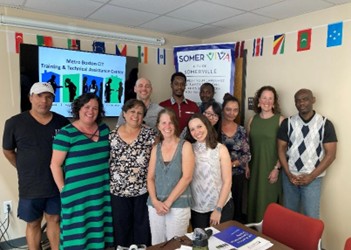
With the help and sponsorship from the City of Somerville and the Department of Mental Health (DMH), the Community Outreach, Help & Recovery Unit oversees the Metro Boston Crisis Intervention Team Training & Technical Assistance Center (Metro Boston CIT-TTAC).
|
The Metro Boston CIT-TTAC utilizes an integrated public health and public safety lens to:
improve communication across behavioral health and criminal justice partners |
| Every year, a wide range of trainings are made available to police departments across the State. Through training, guidance on CIT implementation and adaptation of Police records management systems, we aim to increase utilization of behavioral health resources, increase data collection and establish best practice interventions. | |
|
To learn more about the Metro Boston CIT-TTAC program visit their website: metrobostoncit.org
|
 |
|
Jennifer Korn, LICSW, CCHP Director, COHR, Metro Boston CIT-TTAC 617-625-6600 ext. 7281
Meagan Scully, MSW Deputy Director, Metro Boston CIT-TTAC 617-625-6600 ext. 7283
Cheryl Delafano, LADC Jail Diversion Coordinator, COHR 617-625-6600 ext. 7345 |
Marissa Cairns, LADC Jail Diversion Clinician, COHR 617-625-6600 ext. 7286
Maya Wright, LCSW Jail Diversion Coordinator, COHR 617-625-6600 ext. 7262
Erin Lydon, BA Project Assistant, Metro Boston CIT-TTAC 617-625-6600 ext. 7285 |