
How to Avoid Distracted Driving
At some point, everyone is guilty in some form of distracted driving. Here are some ideas to help drive more safely.
Use your cell phone for emergency situations only. While you are driving, a cell phone should only be used for an emergency. Even then, it’s best to pull over to safely make a call. Hands-free devices can still cause you to miss important visual and audio cues.
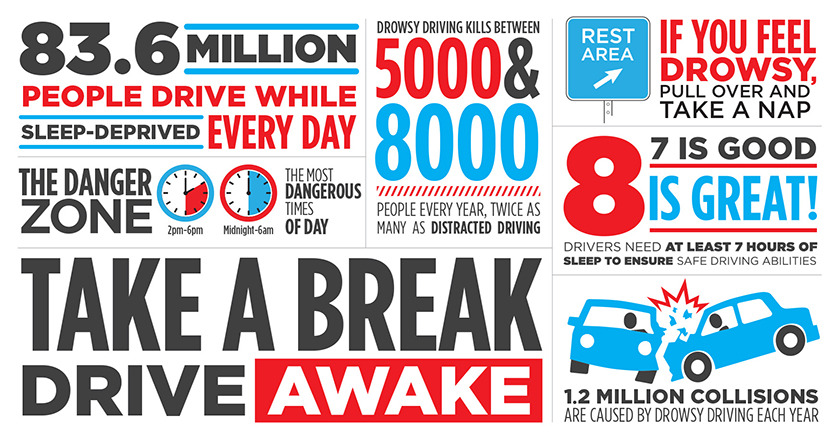
If you are drowsy, pull over. Drowsiness increases the risk of a crash by nearly four times. A government study showed that 37% of U.S. drivers have nodded off or fallen asleep at least once. If you feel tired, get off the road; don’t try to get home faster.
Avoid eating while driving. Finish your breakfast on the way to work or school may seem like a great idea if you are busy, but it means you are less attentive to the drivers around you. Food spills are also a major distraction.
Don’t multi-task inside the car. It may seem like the perfect time to get all the little things done in the car on your way to work or school: calling friends, searching for good music, even text messaging. Don’t do it. Focus on the road and the drivers around you. Get everything settled before you turn on the engine.
Take your time driving. If you are in a hurry to beat traffic, slow down. Speeding and aggressively driving to get to work or school can result in an accidents on the road.
Studies show that there are multiple demands that occur while driving, so people are forced to shift their attention back and forth during the ride. Teens have less experience behind the wheel so distractions are more costly.
Additional Resource Pamphlets:
Safety Tips
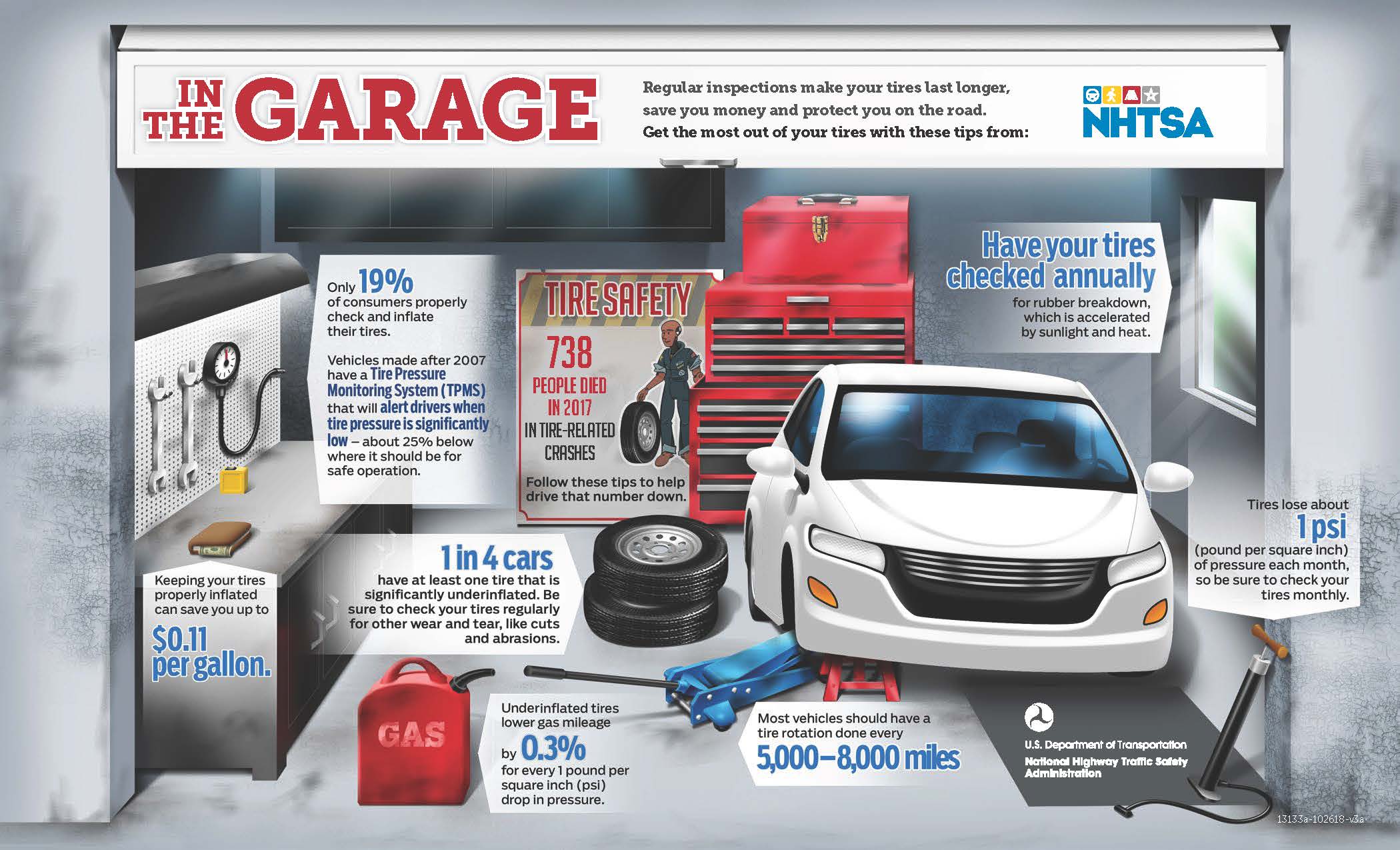
How well do you take care of your tires? Do you keep them properly inflated? If you care about your safety, and about saving money, it’s important to understand how tires affect your vehicle’s performance.
Poor tire maintenance---not having enough air in your tires and failing to rotate your tires, among other maintenance requirements—can lead to a flat tire, blowout, or the tread coming off your tire.
In 2017, total of 738 people died on the road in tire-related crashes.
Properly inflated tires can save you as much as 11 cents per gallon on fuel.
Only 19% of consumers properly inflate their tires. That means four out of five consumers are wasting money because of underinflated tires!
Proper tire maintenance like, rotation, balance and alignment, can help your tires last longer. In fact, properly inflated tires can extend the average life of a tire by 4,700 miles.
Five tire maintenance tips for safety and savings
Tire Pressure
Tire Tread
Balance and Alignment
Tire Rotation
Tire Size
Frequently Asked Question:
My tire blew out, what should I do?
A tire blow out is a rapid loss of tire air pressure that can cause your vehicle to lose control. Here are some tips to help you stay safe in the event of a blowout.
The goal in any blowout is to keep the vehicle balanced and controllable. Don’t panic. Any overreaction---including slamming on the brakes or abruptly removing your foot from the accelerator –can result in a loss of control over the vehicle.
Instead, you should take the following steps:
Hold the steering wheel with both hands.
Maintain your vehicle speed if possible.
Gradually release the accelerator.
Look where you want the vehicle to go and steer in that direction.
Continue to slow down and pull off the road where and when you judge it’s safe to do so.
No matter which tire blows out—front or back—the steps for maintaining control of your vehicle are the same. The only difference is how you will feel it. In a front tire blowout, you feel the force more in the steering. In a rear blow out, you feel it more in the seat or body of the vehicle.
Risky Driving
Many substances can impair driving, including alcohol, some over-the-counter and prescription drugs, and illegal drugs.
Alcohol, marijuana, and other drugs impair the ability to drive because they slow coordination, judgment, and reaction times.
Using two or more drugs at the same time, including alcohol, can amplify the impairing effects of each drug a person has consumed.
Some prescription and over-the-counter medicines can cause extreme drowsiness, dizziness, and other side effects. Read and follow all warning labels before driving, and note that warnings against “operating heavy machinery” include driving a vehicle.
Impaired drivers can’t accurately assess their own impairment – which is why no one should drive after using any impairing substances.
Remember: If you feel different, you drive different.
Older Drivers
Between 2008 and 2017, the number of older people in United States increased by 31% while the total population of all ages increased by 7%.
6,784 people 65 and older were killed in motor vehicle traffic crashes in 2017 - a decrease of 1% in the number of fatalities in this group from 2016 (6,846), making up 18% of all traffic fatalities (compared to 2016).
These resources will provide help for those who need to have conversations with older drivers about their driving abilities.
This information was provided by the United States Department of Transportation and the National Highway Traffic Safety Administration.
Drivers: Share the Road
People on bicycles have the same rights and responsibilities as people behind the wheel of a vehicle.
- Yield to bicyclists as you would motorists and do not underestimate their speed. This will help avoid turning in front of a bicyclist traveling on the road or sidewalk, often at an intersection or driveway.
In parking lots, at stop signs, when packing up, or when parking, search your surroundings for other vehicles, including bicycles.
Drivers turning right on red should look to the right and behind to avoid hitting a bicyclist approaching from the right rear. Stop completely and look left-right-left and behind before turning right on red.
Obey the speed limit, reduce speed for road conditions and drive defensively to avoid a crash with a cyclist.
Give cyclists room. Do not pass too closely. Pass bicyclists as you would any other vehicle—when it’s safe to move over into an adjacent lane.
Pedestrian Motion Graphics - Driving Safely
Drive Predictably
By driving predictably, motorists get a sense of what you intend to do and can react to avoid a crash.
Drive where you are expected to be seen, travel in the same direction as traffic and signal and look over your shoulder before changing lane position or turning.
Avoid or minimize sidewalk riding. Cars don’t expect to see moving traffic on a sidewalk and don’t look for you when backing out of a driveway or turning. Sidewalks sometimes end unexpectedly, forcing the bicyclist into a road when a car isn’t expecting to look for a bicyclist.
If you must ride on the sidewalk remember to:
- Check your law to make sure sidewalk riding is legal;
- Watch for pedestrians;
- Pass pedestrians with care by first announcing “on your left” or “passing on your left” or use a bell;
- Ride in the same direction as traffic. This way, if the sidewalk ends, you are already riding with the flow of traffic. If crossing a street, motorists will look left, right, left for traffic. When you are to the driver’s left, the driver is more likely to see you;
- Slow and look for traffic (left-right-left and behind) when crossing a street from a sidewalk; be prepared to stop and follow the pedestrian signals; and
- Slow down and look for cars backing out of driveways or turning.
Related Articles:
Driving while using your cell phone will be illegal in Massachusetts - What you need to know
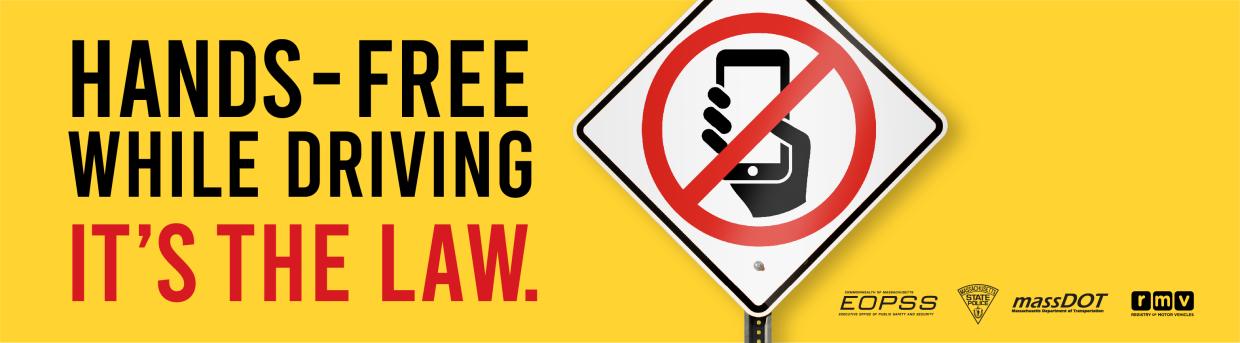
On November 25 2019, Governor Baker signed a hands-free driving bill into law which will make it illegal to use your cell phone while driving, with a few exceptions. The law will go into effect February 23, 2020.
Here is an excerpt from the law:
“No operator of a motor vehicle shall hold a mobile electronic device or “use a mobile electronic device unless the device is being used in hands free mode.”
So essentially, you can use your phone while in the car, but it has to be in hands-free mode and the only time you can legally touch it is to activate hands-free mode.
Note: There is a separate law in effect since 2010 that banned Massachusetts drivers under 18 years of age from using a cell phone in any way while driving, even in hands-free mode. This same 2010 law also made it illegal for drivers of any age to read or text while driving.
Emergency exceptions
There are several emergency scenarios in which it is still OK to use your phone while driving. They are:
• Reporting that your vehicle is disabled.
• Calling to report there is a disabled vehicle or accident in the road.
• Calling emergency services for the safety of the driver, passenger, or the safety of the public.
• Calling to report that medical attention is needed.
Penalties for breaking the law
Although the law goes into effect on February 23, 2020, there will be a short grace period until March 31, 2020 during which first time violators of the new law will receive warnings.
After this grace period ends, violators will be:
1. Fined $100 for their first time offense;
2. Fined $250 for the second offense;
3. $500 fine for third or subsequent offense plus an increase in insurance cost. Third time and subsequent offenders will also need to complete a mandatory educational course on preventing distracted driving. Lastly, third time offenders and subsequent offenders will be hit with an increase in their insurance premium as these occurrences will be considered “surchargeable incidents”.
Setting up Hands-free mode on your device
So the main takeaway here is that violating this law will get expensive and inconvenient fast. Now is a good time to figure out hands-free mode on your device in preparation for February 2020.
Click below for a brief guide explaining how to active hands-free mode for iPhone:
How to Use The iPhone's New Voice Control Feature
For other phone types do a Google search for “How to activate hands free mode on (your phone name here)”. Setup for most devices is easy and usually only takes about a minute or less.
In Summary
Statistics have shown that distracted driving is dangerous and expensive. According to an April 2018 report by the U.S. Department of Transportation, 9 people per day die and over 1000 are injured in accidents involving distracted drivers. One in four accidents is caused by distracted driving nationally. Hopefully the new law will prevent some of those distracted driving deaths and injuries in Massachusetts and make for a better driving experience for everyone throughout the state. The bottom line: don’t do other stuff while driving – just drive!